
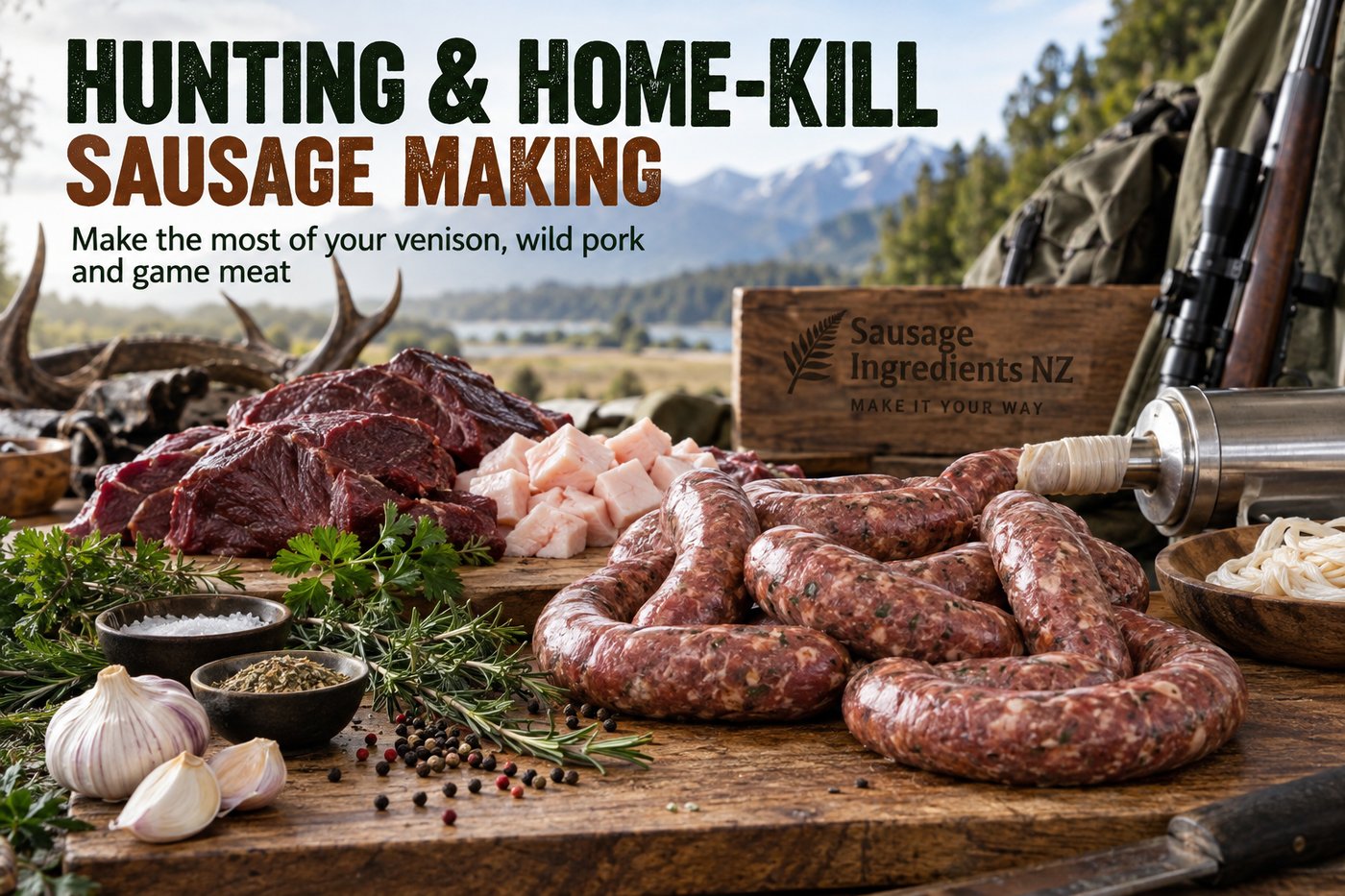
If you’re a hunter or process your own home-kill meat, making your own sausages is a great way to turn venison, wild pork and other game meat into delicious meals for family and friends.
At Sausage Ingredients NZ, we know that game meat can be different from regular commercial meat. Venison is naturally very lean, while wild pork can vary considerably in fat content. Understanding how to balance your meat, fat, seasoning and moisture is the key to making sausages with great flavour and texture.
Venison is a fantastic meat for sausage making, but because it is naturally lean, it can produce a dry or crumbly sausage if additional fat isn’t considered.
Adding pork fat to lean venison can help create a sausage that is:
The amount of additional fat required depends on how lean your venison is and the type of sausage you’re making.
Our tip: Check your venison before mincing and adjust the amount of added fat to suit the meat.
Wild pork is particularly versatile for sausage making. The amount of natural fat can vary significantly, so inspect and trim your meat before deciding whether additional fat is required.
Remove excessive sinew, gristle and unwanted connective tissue before mincing.
Wild pork works particularly well with flavours including:
Garlic • Fennel • Sage • Pepper • Chilli • Herbs • Smoky flavours
You can also combine wild pork with other meats to create your own unique sausage recipes.
Getting the balance between lean meat and fat right is one of the most important parts of sausage making.
Very lean sausage meat can result in sausages that are:
Excessive fat can result in:
For particularly lean game meat such as venison, adding suitable pork fat can make a significant difference to the finished sausage.
Many sausage seasoning blends use chilled water as part of the recipe.
Water helps distribute the seasoning throughout the meat and contributes to the final texture.
When using a prepared sausage seasoning, always follow the mixing instructions supplied with that particular product.
Tip: Keep your water very cold and add it gradually while mixing.
Game meat has a distinctive flavour, giving you plenty of opportunities to experiment with different seasoning combinations.
Venison works well with:
Wild pork pairs particularly well with:
Try different combinations to develop your own signature home-kill sausage.
The casing you choose can change the size, appearance and eating experience of your finished sausage.
For beginners, Sausage Ingredients NZ recommends 32–35 mm natural hog casings as a great all-round choice.
They are suitable for many types of:
Sausage Ingredients NZ
What meat can I use for home-kill sausages?
You can make sausages from a wide range of meats, including venison, beef, pork, lamb and wild game. You can also combine different meats to create your own flavour and texture.
Can I make sausages using venison?
Yes. Venison is excellent for sausage making, but because it is naturally very lean, it is usually best to add some pork fat or another suitable fat source. This helps produce a juicier sausage with a better texture.
How much fat should I add to venison sausages?
The amount depends on how lean your venison is and the type of sausage you want to make. As a general starting point, 15–25% fat can work well for a juicy sausage. You can adjust this to suit your preference.
Should I trim all the fat from home-kill meat?
Not necessarily. Some fat is desirable in sausage making because it contributes to flavour, moisture and texture. However, remove unwanted sinew, gristle, bone fragments and excessive connective tissue.
What is the best cut of meat for sausages?
There isn’t one single best cut. Sausage making is a great way to use trim and secondary cuts that may not otherwise be used for steaks or roasts. A good balance of lean meat and fat will generally give you the best result.
Can I mix venison with pork?
Absolutely. Venison and pork make a popular combination. Pork can add fat and richness to lean venison while allowing the flavour of the game meat to remain prominent.
Do I need to chill my meat before mincing?
Yes. Keeping the meat very cold is important. Cold meat minces more cleanly and helps prevent the fat from smearing. Keep your meat chilled throughout the sausage-making process.
Why is it important to keep sausage meat cold?
Cold temperatures help maintain the structure of the meat and fat and make mixing and stuffing easier. Keeping everything cold also forms part of good food-handling practice.
What size mincing plate should I use?
The ideal size depends on the style of sausage you’re making. A 4–5 mm plate is a useful starting point for many fresh sausages, giving a good balance between texture and binding.
Should I mix the sausage meat after adding the seasoning?
Yes. Mix thoroughly until the seasoning and liquid are evenly distributed and the meat becomes sticky and well bound. This helps the sausage hold together during stuffing and cooking.
How much water should I add?
The amount depends on the seasoning blend and recipe you’re using. Always follow the mixing instructions supplied with your sausage seasoning. Add chilled water gradually and mix until it is fully absorbed.
Why does my sausage meat need to become sticky?
The sticky texture indicates that the meat proteins have been properly extracted during mixing. This helps the sausage bind together and gives you a better bite and texture when cooked.
What sausage casings are best for beginners?
For beginners, Sausage Ingredients NZ generally recommends 32–35 mm natural hog casings as a versatile all-round option. They are suitable for many traditional fresh sausages.
Can I use sheep casings for home-kill sausages?
Yes. Natural sheep casings can be used when you want a smaller, more delicate sausage. They are particularly suitable for breakfast-style sausages and other thinner sausages.
How do I stop my sausages from splitting when cooking?
Avoid cooking them at excessively high temperatures. Start with a moderate heat and cook them steadily. Overfilling the casing can also increase the chance of splitting, so make sure the casing is filled firmly but not excessively tight.
Why are my sausages dry?
Dry sausages can be caused by insufficient fat, overcooking or an unsuitable meat-to-fat ratio. Venison and other game meats can be particularly prone to dryness because they are naturally lean.
Why do my sausages have air pockets?
Air can become trapped during stuffing. Try to keep a consistent flow of meat into the casing and remove trapped air where necessary. Avoid overfilling the casing.
Can I freeze home-kill sausages?
Yes. Fresh sausages can be frozen for later use. Package them well to reduce exposure to air and freezer burn, and label them with the type of sausage and date made.
How long can fresh sausages be kept in the fridge?
Fresh sausages are perishable and should be kept properly chilled. If you’re not going to use them promptly, freeze them rather than keeping them refrigerated for an extended period.
Can I make sausages in large batches when hunting?
Yes. Making sausages in batches is a great way to process a large amount of home-kill meat. Divide the meat into manageable quantities and keep unused meat cold while you work.
What should I do with leftover sausage meat?
Leftover sausage meat can be shaped into patties, meatballs or meatloaf, provided it has been handled and stored safely. It is a great way to avoid wasting your prepared mixture.
Can I use sausage seasoning with different types of game meat?
Many seasoning blends work well with different meats, but flavour will vary depending on the meat being used. Venison, wild pork, beef and other game meats can each produce a different result. Experimenting with different blends can be part of the fun.
What is the most important tip for making home-kill sausages?
Keep everything cold, use good-quality meat and fat, mix thoroughly, and don’t rush the process. Good preparation makes a big difference to the finished sausage.
New to making sausages? Start with a simple recipe. Choose a good-quality seasoning, use a suitable meat-to-fat ratio, and try 32–35 mm natural hog casings. Once you’ve mastered the basics, you can start experimenting with different meats, spices and flavours.